
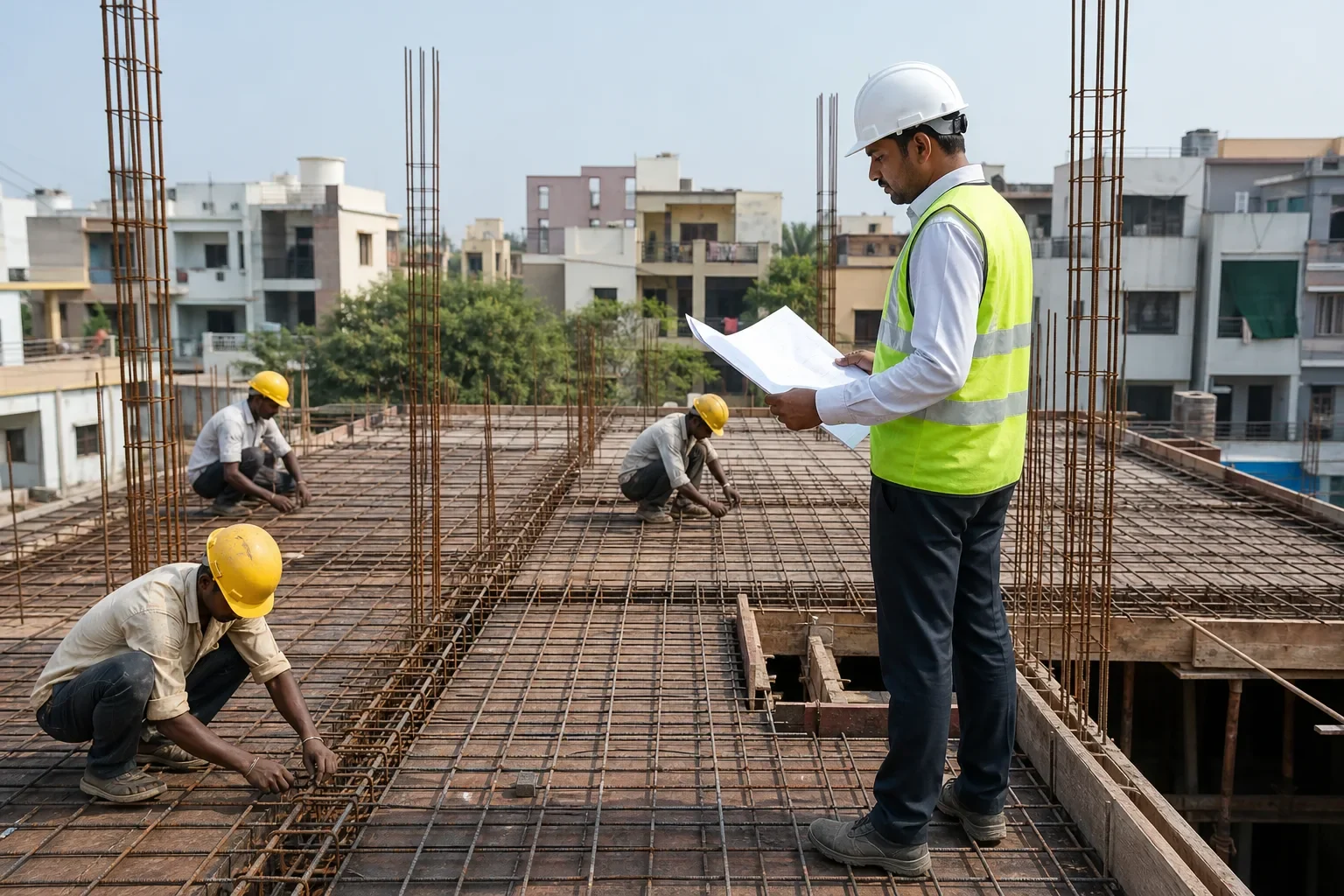
Many plot owners in Nagpur hear the term “civil contractor” for the first time when they start planning a house. So what does a civil contractor do, and where does their work start and end? In simple terms, a civil contractor turns approved drawings into a standing, safe structure. They organize labor, materials, machinery and supervision so that each stage of civil construction is done in the right order and to the right quality.
In this guide
What Does a Civil Contractor Do on a House Project?
On a typical residential project, the civil contractor is the team on the ground. Their job covers:
- Site preparation: clearing the plot, marking the layout as per drawings and setting levels.
- Excavation and foundation: digging, laying PCC, building footings and plinth beams.
- RCC structure: shuttering, steel binding, concreting and curing of columns, beams and slabs.
- Masonry: brick or block walls, lintels and chajjas.
- Plastering: internal and external plaster, often with waterproofing in key areas.
- Coordination: making space and openings for plumbing and electrical lines at the right time.
Depending on the contract, the civil contractor may also handle flooring, tiling, painting and finishing, or these may go to separate agencies.
Labor-Only vs With-Material Contracts
This is the first question to settle, because it changes your role completely.
| Contract type | Who buys materials | Your involvement |
|---|---|---|
| Labor-only | You (owner) | High: ordering, checking and storing cement, steel, sand, bricks |
| With material | Contractor | Lower: you check quality and progress against agreed specifications |
| Turnkey | Contractor, including finishes | Lowest: you approve choices and inspect stages |
Labor-only can look less expensive on paper, but it needs time and knowledge from the owner. A with-material or turnkey contract puts more responsibility on the contractor, which is why the specifications in the agreement matter so much.
Stage-Wise Responsibilities
Before construction
A good civil contractor reads the drawings carefully, points out practical issues, prepares a work schedule and helps you understand the payment stages. Many also guide you on approvals with NMC or NIT, though the drawings themselves come from your architect.
During construction
They manage daily labor, check line and level, ensure steel is placed as per the structural drawing, control the concrete mix and arrange curing. Regular quality checks before each slab casting are a sign of a careful contractor.
At handover
The contractor clears the site, fixes snag-list items you point out and hands over the building. Ask in advance what support they offer if a leak or crack appears in the first months.
What a Civil Contractor Usually Does Not Do
- Prepare architectural plans or structural designs (unless the company has its own design team).
- Obtain legal title or verify plot documents.
- Choose your interiors, unless interiors are part of the scope.
Knowing these limits avoids confusion later. If you want one team to handle design coordination, construction and finishing, a turnkey home construction contract is usually the simpler path.
How to Brief a Civil Contractor
- Share the approved plan, structural drawings and plot details.
- State whether you want labor-only, with material or turnkey.
- List material preferences: cement and steel brands, brick type, tile allowance.
- Agree on a stage-wise payment schedule and a realistic timeline.
- Fix how often you or your engineer will do a site visit.
Choosing a Civil Contractor in Nagpur
Look for experience with houses similar to yours, organized ongoing sites and clear paperwork. Our earlier guide on choosing civil contractors in Nagpur covers the verification steps in more detail, and you can read about our own civil construction services to see how a stage-wise approach works.
Frequently asked questions
What is the main job of a civil contractor?
A civil contractor builds the structure of a building as per the approved drawings: site layout, excavation, foundation, RCC columns, beams and slabs, masonry and plaster, with the labor, supervision and, if agreed, materials needed.
Is a civil contractor the same as a builder?
The terms are often used loosely. A civil contractor usually executes construction on your plot under a contract, while a builder or developer often builds on their own land and sells finished units. Some companies do both.
Does a civil contractor make the house design?
Usually not. The architect prepares the plan and the structural engineer designs columns, beams and steel. The civil contractor builds according to those drawings, though some companies have in-house design teams.
What is a with-material civil contract?
In a with-material contract the contractor supplies both labor and materials such as cement, steel, sand and bricks as per the agreed specifications, and you pay in stages as the work progresses.